A business website serves as more than a digital brochure. It acts as a lead generation tool, sales platform and brand experience hub that influences customer decisions at every stage of the buying journey. While many websites focus on aesthetics alone, successful businesses understand that design must support usability, trust and conversion objectives simultaneously. A professional custom web design company develops websites that align user experience, branding and conversion strategy to maximize business outcomes. Different web design frameworks contribute to performance in unique ways, making it important to understand their strengths and limitations when building a high-converting website.
Image source: pexels.com
User-Centered Design Strategy
User-centered design focuses on understanding visitor behavior, needs and expectations before making design decisions. Navigation structures, content layouts and user journeys are built around customer goals rather than internal business preferences.
The primary advantage is usability. Visitors can locate information quickly, complete actions efficiently and move through the website without confusion. Improved usability often reduces bounce rates while increasing engagement and lead generation opportunities.
According to Matt Bowman of Thrive Agency, businesses frequently improve conversion rates when design decisions prioritize user behavior instead of visual trends alone. Websites that solve user problems efficiently often outperform more visually impressive websites that create friction within the customer journey.
The limitation is research requirements. Effective user-centered design depends on audience analysis, testing and ongoing optimization. Businesses that skip research may struggle to identify what visitors actually need from the website experience.
Conversion-Focused Design Strategy
Conversion-focused design prioritizes lead generation and customer acquisition. This framework incorporates strategic calls to action, trust elements, conversion pathways and persuasive layouts that encourage visitors to take action.
The strongest advantage is measurable business impact. Every design element supports a conversion objective, helping businesses maximize the value of their website traffic. Well-positioned forms, calls to action and conversion pathways often generate significant improvements in lead volume.
The challenge is balance. Excessive focus on conversion elements can overwhelm visitors and create a sales-heavy experience. Businesses must ensure conversion opportunities support rather than disrupt the user experience.
Mobile-First Design Strategy
Mobile-first design prioritizes the experience of smartphone and tablet users before adapting layouts for desktop devices. As mobile traffic continues to dominate many industries, this approach has become increasingly important.
One significant advantage is accessibility. Mobile-first websites provide consistent experiences across devices while supporting users who browse and purchase on smaller screens. Search engines also favor mobile-friendly websites, contributing to stronger visibility.
The downside is design complexity. Businesses must ensure that mobile optimization does not limit desktop functionality or content depth. Maintaining performance across multiple devices requires careful planning and testing.
Brand Experience Design Strategy
Brand experience design focuses on aligning visual identity, messaging and user interactions to create a consistent perception of the business. This framework extends beyond aesthetics and incorporates how customers feel while engaging with the website.
The primary benefit is differentiation. Strong brand experiences help businesses stand out in competitive markets while improving recognition and trust. Consistent design elements often strengthen credibility and reinforce customer confidence.
The limitation is subjectivity. Branding decisions can become heavily influenced by internal opinions rather than customer needs. Businesses should balance brand expression with usability and conversion objectives.
Performance Optimization Strategy
Performance-focused design prioritizes page speed, technical efficiency and streamlined experiences. This strategy ensures users can access content quickly without delays or usability issues.
The major advantage is engagement. Faster websites typically experience lower abandonment rates and stronger conversion performance. Improved site speed also supports SEO efforts by enhancing user satisfaction and search visibility.
The challenge is technical implementation. Performance optimization often requires collaboration between designers, developers and marketers. Some visual features may need to be simplified to maintain speed and efficiency.
Trust and Credibility Design Strategy
Trust-focused design incorporates testimonials, certifications, social proof, security indicators and credibility elements throughout the website. This framework addresses concerns that may prevent visitors from converting.
The strongest advantage is confidence building. Visitors are more likely to engage with businesses that appear trustworthy and professional. Strong trust signals often improve lead generation performance and reduce hesitation during the decision-making process.
The downside is dependency on supporting assets. Businesses require authentic reviews, success stories and proof points to maximize the effectiveness of trust-focused design.
Web Design Strategy Impact Comparison
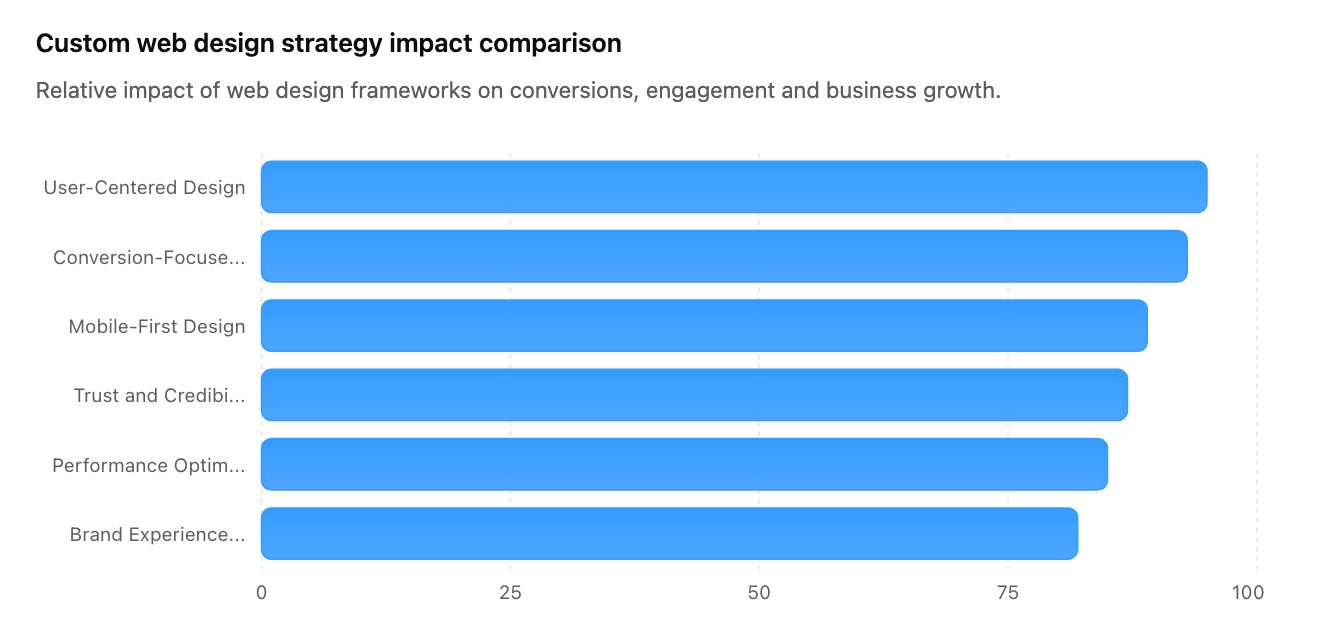
COMPARISON SUMMARY
━━━━━━━━━━━━━━━━━━━━━━━━━━
USER-CENTERED DESIGN
Strengths
Prioritizes visitor needs and improves overall usability.
Benefits
Increases engagement, satisfaction and conversion opportunities.
Weaknesses
Requires ongoing research and behavioral analysis.
━━━━━━━━━━━━━━━━━━━━━━━━━━
CONVERSION-FOCUSED DESIGN
Strengths
Aligns website elements with business objectives.
Benefits
Improves lead generation and customer acquisition efficiency.
Weaknesses
Can become overly sales-focused if not balanced properly.
━━━━━━━━━━━━━━━━━━━━━━━━━━
MOBILE-FIRST DESIGN
Strengths
Creates seamless experiences across mobile devices.
Benefits
Supports accessibility, SEO performance and user engagement.
Weaknesses
Requires additional planning to maintain desktop functionality.
━━━━━━━━━━━━━━━━━━━━━━━━━━
BRAND EXPERIENCE DESIGN
Strengths
Strengthens brand identity and market differentiation.
Benefits
Improves recognition, trust and customer perception.
Weaknesses
Branding preferences may sometimes conflict with usability goals.
━━━━━━━━━━━━━━━━━━━━━━━━━━
PERFORMANCE OPTIMIZATION
Strengths
Improves site speed and technical efficiency.
Benefits
Reduces abandonment rates and supports SEO performance.
Weaknesses
May require limiting certain design elements to maintain speed.
━━━━━━━━━━━━━━━━━━━━━━━━━━
TRUST AND CREDIBILITY DESIGN
Strengths
Reduces hesitation and strengthens visitor confidence.
Benefits
Improves conversion rates and overall website effectiveness.
Weaknesses
Requires authentic proof points and supporting assets.
Businesses working with a custom web design company should focus on creating websites that balance usability, branding and conversion performance. User-centered design, conversion optimization, mobile experiences, brand consistency, performance improvements and trust-building elements each contribute unique value. Organizations that integrate these frameworks strategically are often better positioned to increase engagement, generate more qualified leads and build high-converting business websites that support long-term growth.