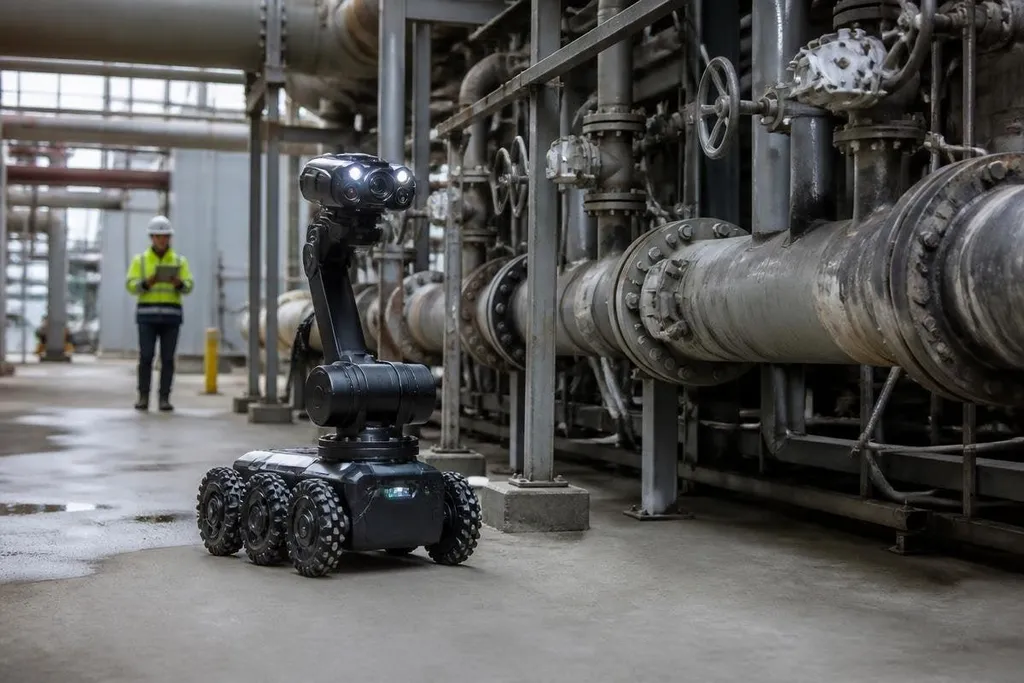
Inspection robots are moving toward a harder test: finding real faults in places people cannot inspect safely or often enough. The systems worth watching will need to show what they detect, how often they miss it, and what happens after the alarm.
Quick read
- Watch defect detection, not camera quality alone.
- Track battery time, route distance, and false alarms.
- Ask who checks the robot’s findings before repair work starts.
Inspection work and proof
A useful inspection robot can move through a plant, tunnel, warehouse, power station, or other work area while normal work continues.
It may carry cameras, thermal sensors, microphones, gas sensors, or laser scanners. Each sensor earns its place by finding a fault that a basic camera would miss.
The first test is repeatability. Can the robot follow the same route again and compare new images with older ones? That comparison can help a maintenance team spot a crack that has grown, a hot motor bearing, or a pipe coating that has changed. The robot does not need to make the repair. It needs to give the right person a clear reason to inspect one location.
This is where autonomous systems meet ordinary maintenance work. A route plan, obstacle map, and inspection record matter more than a polished demonstration because a site team needs evidence it can check later.
The strongest progress will come from tasks with a clear result. Each system should record the location, sensor reading, image, and time for each finding. That record lets a technician compare the alarm with the physical asset.
Surface checks can use cameras and lighting to find cracks, corrosion, missing bolts, or damaged insulation. Thermal sensors can flag unusual heat around motors, electrical cabinets, bearings, or pipes. Microphones can help find air leaks, valve problems, or changes in rotating equipment. Gas sensors can warn about a leak before a person enters the area, while laser scanners can measure changes in a tank, structure, rail, or pipe.
These jobs have different error costs. A false alarm can send a technician to a healthy asset, while a missed fault can leave damaged equipment in service. Any serious test must report both numbers.
An inspection alert matters only when a technician can act on it at the site. When you read inspection robot reports on Robot 24, look for the robot, asset, fault type, test setting, and date. Those details show whether the alert can guide a real repair instead of ending on a screen.
The hard part is the handoff
Finding a possible fault is only one step. The inspection record must reach the maintenance system in a form that a technician can use. That may mean a marked image, a sensor reading, a map point, or a direct link to an asset number.
Human review still matters when the cost of a missed defect is high. The system can rank findings by sensor result or change from the previous visit, but a person may need to confirm the fault before a shutdown or repair.
The open issue is weather and site clutter. Dust, glare, rain, steam, moving vehicles, narrow paths, and poor wireless coverage can change what the sensors see. A robot that works inside a clean test area has not yet proved it can inspect a busy plant.
A buyer’s inspection checklist
Before you compare systems, ask for these details in writing:
- The exact assets and fault types the robot can inspect.
- The sensor used for each fault, plus its range and limits.
- Battery time, charging method, and route distance per shift.
- The false-alarm rate and missed-fault rate from a named test.
- The file format for images, readings, maps, and asset locations.
- The human review step before a finding becomes a repair order.
I’d watch the systems with repeatable records before the ones with the smoothest demo video. Inspection robots will earn a place on site when a maintenance team can compare two visits, check one alarm, and make a safer repair decision from the evidence.